|
11-13 May 2026 Reykjavík (Iceland)
|
|
|
|
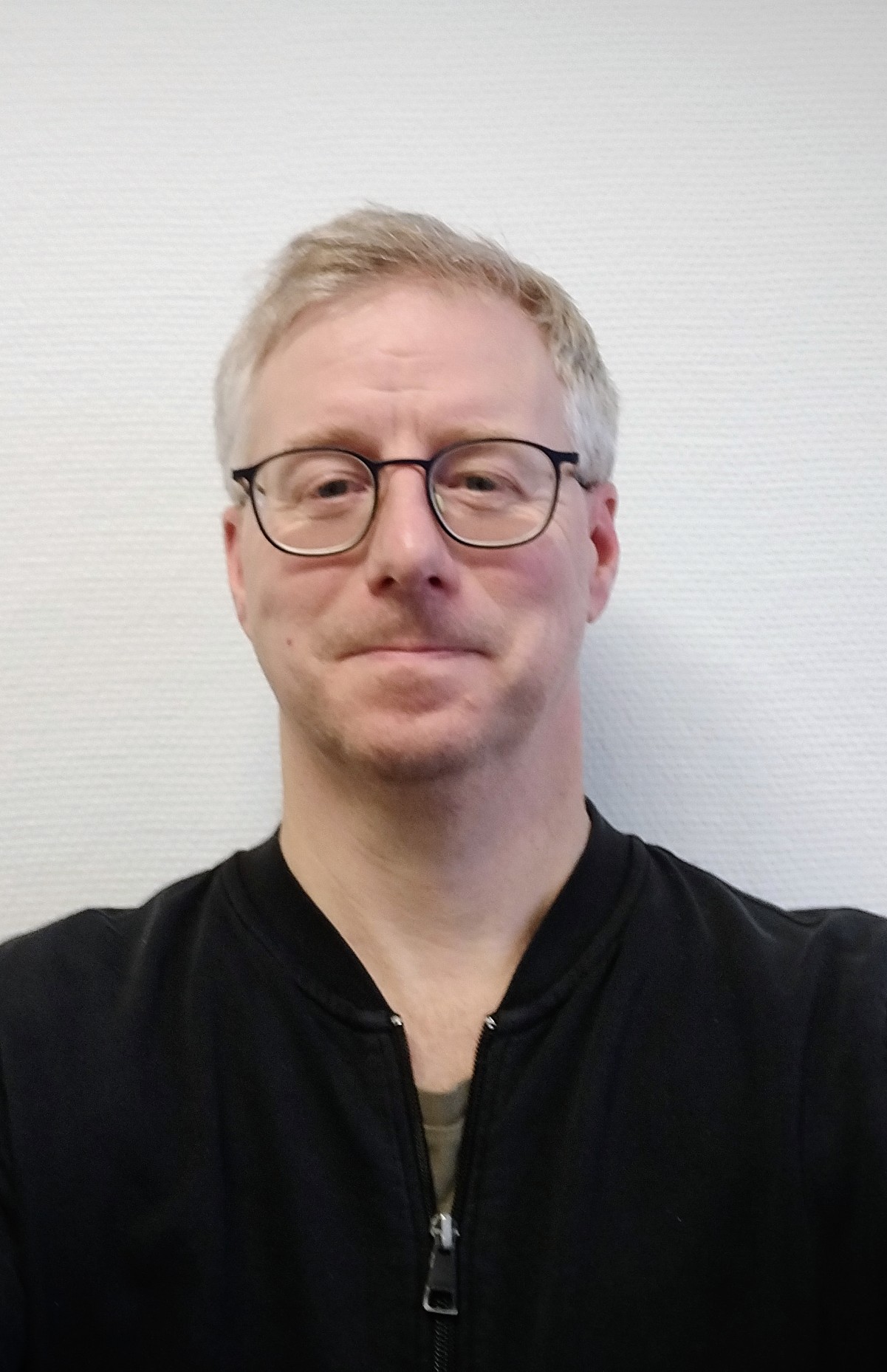
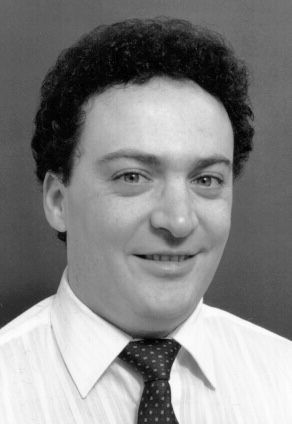
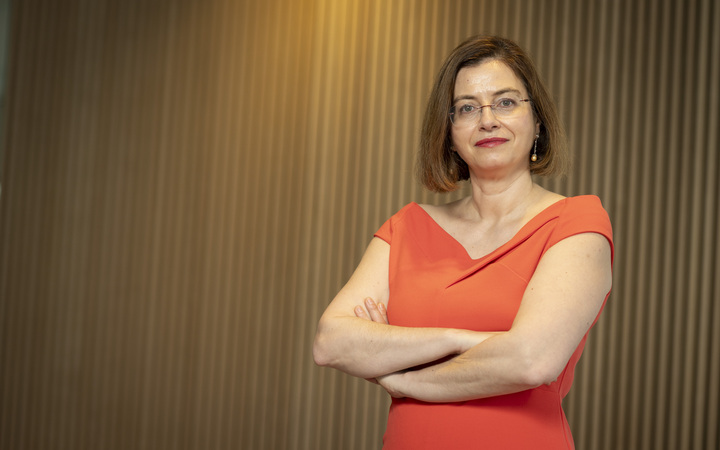
Keynote lecturesKEYNOTES The keynote speakers for the IV European Conference on Queueing Theory (ECQT) will be: Joris Walraevens (Ghent University) — “Novel Multiclass Queueing Models for Road Traffic”
In this talk, we review several existing probabilistic models for road traffic, such as the Totally Asymmetric Simple Exclusion Process (TASEP) from statistical physics. We then explore novel multiclass queueing models, which are suitable to model vehicle heterogeneity in road traffic. Different vehicle types do not only differ in attainable speeds but also in feasible accelerations and decelerations. For instance, freight vehicles accelerate at a slower pace than normal vehicles, leading to slower queue dissipation and the creation of gaps. We model this using multi-class queueing models in which the service rate depends on the presence of one of the classes. We discuss alternative models depending on the instants when the service rate switches. Typical performance measures are (a) the amount of occupied road (expressed in vehicle equivalents) and (b) the wasted time. The length of gaps originating from different accelerations may also be of interest. Joris Walraevens received the M.S. degree in Electrical Engineering and the Ph.D. degree in Engineering in 1997 and 2004, respectively, both from Ghent University, Belgium. In September 1997, he joined the SMACS Research Group, Department of Telecommunications and Information Processing, at the same university. He was appointed full-time associate professor at Ghent University in 2012 and has been a full professor since 2022. Since October 2018, he has also been head of the department. His main research interests are multi-class queueing models and their applications in telecommunication networks, healthcare, and transportation networks. Mark Squillante (IBM Research) — “Scheduling in Stochastic Networks with Constraints”
Optimal scheduling in stochastic networks with constraints is of great queueing-theoretic interest. Throughput-optimal scheduling policies have been established for various instances of these stochastic networks. Meanwhile, the problem of delay-optimal scheduling has remained open for more than 30 years. In this talk, we will consider a particular instance of stochastic networks with constraints in the context of the original stochastic model and a corresponding fluid model. We will derive optimal scheduling policies and establish associated theoretical properties for both models with the objective to minimize over an infinite horizon the discounted delay and fluid-flow costs, respectively. This includes establishing coincidence between the scheduling policies across the stochastic and fluid models in certain domains. Computational experiments demonstrate the benefits of such optimal scheduling policies over alternative policies deemed to be delay optimal. Although focused on a particular instance of stochastic networks with constraints, these results can be exploited more broadly in the context of stochastic networks with constraints. Mark S. Squillante is a Distinguished Research Scientist and Manager in the Mathematical Sciences Department of IBM Research at the Thomas J. Watson Research Center. He has been an adjunct faculty member in the School of Operations Research and Information Engineering at Cornell Tech and the School of Engineering and Applied Science at Columbia University, also holding visiting positions at various academic institutions. He received his Ph.D. degree from the University of Washington. His research interests broadly concern the mathematical foundations of the analysis, modeling and optimization of the design, control and performance of stochastic systems. He is an elected Fellow of ACM, IEEE, INFORMS, SIAM, AAIA, and AIIA; recipient of The Best Publication in Applied Probability Award (INFORMS APS), The Daniel H. Wagner Prize (INFORMS), 9 Best Paper Awards, 20 Keynote/Plenary Presentations, and 28 Major IBM Technical Awards. He currently serves as Editor-in-Chief of Stochastic Models, and on the Board of Directors of AACC; he also served as Chair of IFIP Working Group 7.3, and on the Board of Directors of INFORMS and ACM SIGMETRICS. His website is https://research.ibm.com/people/mark-squillante. Maria Vlasiou (University of Twente) — “Queues on Interacting Networks”
Classical queueing theory studies congestion and delay in systems whose structure is fixed and whose components interact in prescribed ways. Many contemporary systems do not fit this paradigm. Communication platforms, service ecosystems, mobility networks, and biological transport systems evolve while they operate, and their queues interact through network dynamics that are themselves stochastic. In such settings, congestion is not merely a local phenomenon, but a network-level outcome shaped by feedback between flows, topology, and state-dependent interactions. Maria Vlasiou is a Full Professor at the University of Twente, the Netherlands, a Research Fellow of the European research institute EURANDOM, and the Director of the Dutch Network on the Mathematics of Operations research, LNMB. In addition, she represents the Netherlands at the Committee for Women in Mathematics of the International Mathematical Union, is the country coordinator for the Netherlands at the European Women in Mathematics association, and is on the advisory boards of the women in mathematics networks of Greece and of Cyprus. Her research centres on the performance of stochastic processing interacting networks. Her research strives to make networked systems sustainable and resilient, focusing on their complex interactions. She develops new mathematical tools in performance evaluation, optimisation, control, and decision making and applies these tools to design new algorithms that can be deployed in data centres, the electricity grid, communication systems, high-tech manufacturing and beyond. She currently serves as an Associate Editor for the journals IISE Transactions, Mathematical Methods of Operations Research, OR Spectrum, and INFOR. |